Early evidence & campus history
The Early Years of Lyons High School
Follow the evidence of attendance beginning in 1902, the circa-1908 photograph, and alumni memories of the early building and its changing place on campus.
Lyons, Georgia 1902–1970
The LHS Archive
A school remembered through its records, its buildings, and the people who knew it.
The history of Lyons High School survives in more than dates and buildings. A teacher’s record, an early school photograph, a catalog, and the recollections of alumni each preserve a different part of its story.
The earliest attendance evidence described in this archive reaches back to 1902. A photograph identified as circa 1908 shows the early three-story school; later recollections describe changes to that building and the campus around it. These sources offer a beginning, while leaving questions about the school’s founding and construction unanswered.
The history also extends beyond the years remembered as LHS. Larry Griggers’s account of the 1975 fire recalls a building then used as Lyons Junior High School. Other contributions preserve everyday school life, friendships, and the bell that once marked the day.
This collection brings documentary evidence and personal memory together, keeping the voices of contributors and the limits of what is known in view.
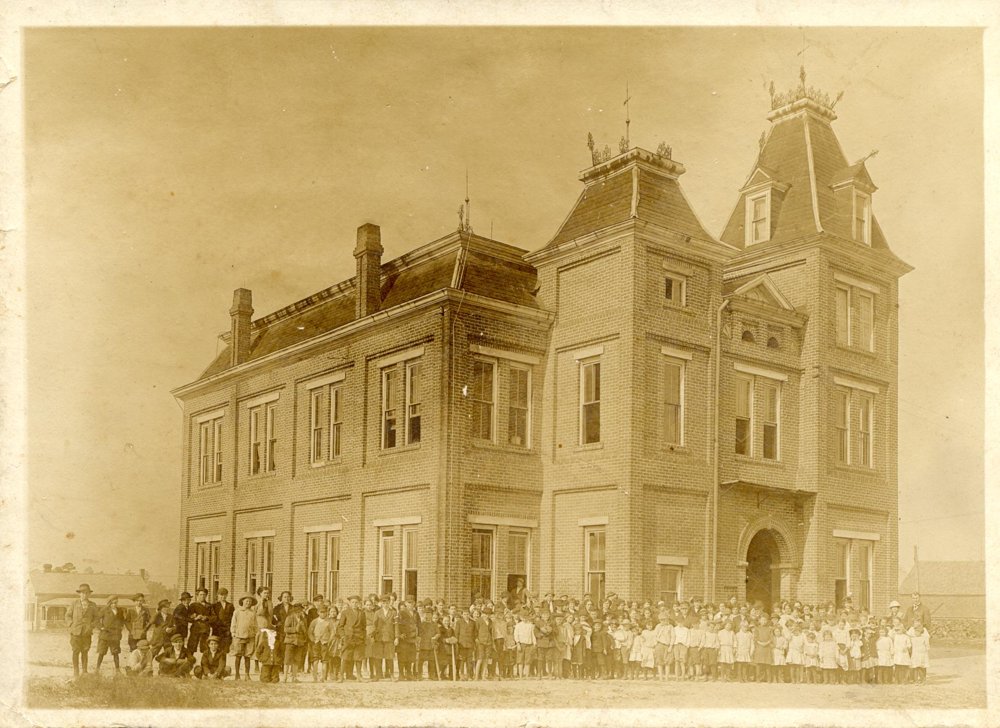
Explore the history
Early evidence & campus history
Follow the evidence of attendance beginning in 1902, the circa-1908 photograph, and alumni memories of the early building and its changing place on campus.
July 18, 1975
Larry Griggers’s first-person account of the fire, with photographs of the aftermath and the recollections that accompany them.
In their own words
Memories of school life and its changing years, shared by Charles Rawls, Bill Carter, Jimmy Alexander, and Joe Phillips.
An everyday artifact
The surviving bell and memories of Otis Phillips, whose ringing marked the school day and whose piano playing brought students together.
Scholastic year 1907–1908
A window into the school’s faculty, rules, curriculum, expenses, and local advertisements, preserved in a catalog contributed by Robert Brown.